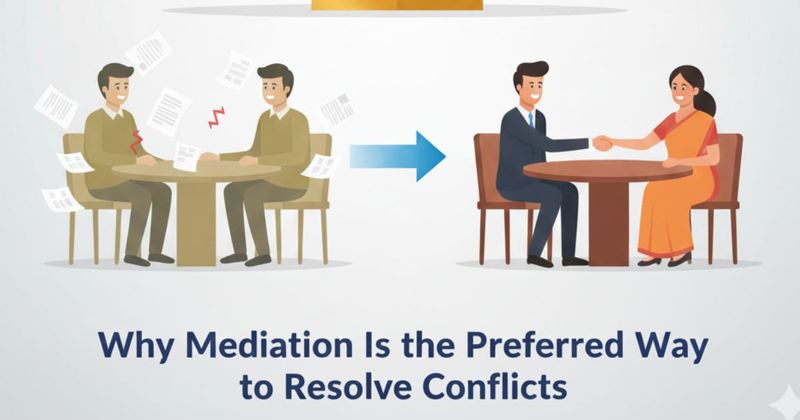
When disputes arise, whether related to business, contracts, family matters, or financial disagreements, people often find themselves choosing between arbitration and court litigation. Both are established ways of resolving conflicts in India, but they differ significantly in how they function, feel, and progress.
A common question many individuals and business owners ask is: “Is arbitration better than court litigation?”
There is no universal answer. The better option depends on the nature of the dispute, the relationship between parties, and what each side hopes to achieve. Understanding how arbitration and court litigation work can help you make a more informed and calmer decision.
What Is Arbitration?
Arbitration is a form of dispute resolution where parties agree to present their case before a neutral arbitrator instead of a judge. The arbitrator listens to both sides and reviews evidence before giving a decision.
Arbitration is often used in:
- Commercial and business disputes
- Contract-related disagreements
- Service or partnership conflicts
It is generally considered more flexible and private than court proceedings.
What Is Court Litigation?
Court litigation is the traditional legal process where disputes are resolved through courts. Parties present their case before a judge, following formal legal procedures and timelines.
Court litigation is commonly chosen when:
- Disputes are complex or contentious
- Legal enforcement is required
- One party does not agree to arbitration
- Matters involve public or statutory issues
This process follows strict procedural rules.
Key Differences Between Arbitration and Court Litigation
Understanding the differences helps clarify which approach may suit your situation better.
1. Formality and Procedure
Court litigation follows a structured and formal process governed by procedural laws. Hearings, filings, and arguments follow strict rules.
Arbitration is generally more flexible. Procedures are often agreed upon by the parties, allowing for a less rigid approach.
2. Privacy and Confidentiality
Court proceedings are usually part of the public record.
Arbitration proceedings are typically private, which many individuals and businesses prefer when confidentiality matters.
3. Control Over the Process
In arbitration, parties often have more say in choosing the arbitrator and deciding procedural aspects.
In court litigation, the process is controlled by the judicial system, leaving less room for flexibility.
4. Emotional and Practical Impact
Court litigation can feel stressful due to prolonged hearings, legal formalities, and public proceedings.
Arbitration may feel less intimidating for some people, as it focuses more on discussion and resolution rather than adversarial arguments.
5. Relationship Between Parties
Arbitration is sometimes chosen when parties want to preserve a working or professional relationship.
Court litigation can strain relationships further due to its adversarial nature.
When Arbitration May Be Considered
Arbitration may be explored when:
- Both parties are open to an alternative dispute process
- Confidentiality is important
- Flexibility is preferred
- The dispute arises from a contractual agreement
It works best when cooperation is possible.
When Court Litigation May Be Necessary
Court litigation may be more appropriate when:
- Arbitration is not mutually agreed upon
- Legal interpretation or enforcement is required
- Disputes involve serious disagreements
- One party refuses to cooperate
In such cases, court intervention provides structure and authority.
Common Misunderstandings About Arbitration and Litigation
“Arbitration always resolves disputes faster”
Timelines depend on case-specific factors.
“Court litigation is always complicated”
Some cases are straightforward and proceed smoothly.
“One option is better for everyone”
The right choice depends on the situation.
Role of Professional Guidance
Many individuals seek professional guidance to:
- Understand dispute resolution options
- Evaluate legal implications
- Reduce emotional stress
- Choose the most suitable path
Professional advice does not guarantee outcomes but helps clarify expectations.
Choosing the Right Approach for Your Situation
Instead of asking which option is “better,” it may help to ask:
- What is the nature of my dispute?
- Is cooperation possible?
- Do I value privacy?
- Do I need formal legal enforcement?
Conclusion
Arbitration and court litigation are both valid dispute resolution methods in India, each with its own strengths and limitations. Arbitration offers flexibility and privacy, while court litigation provides structure and legal authority.
There is no one-size-fits-all answer. Understanding the differences between arbitration vs court litigation allows individuals and businesses to make thoughtful decisions based on their specific needs, circumstances, and expectations.