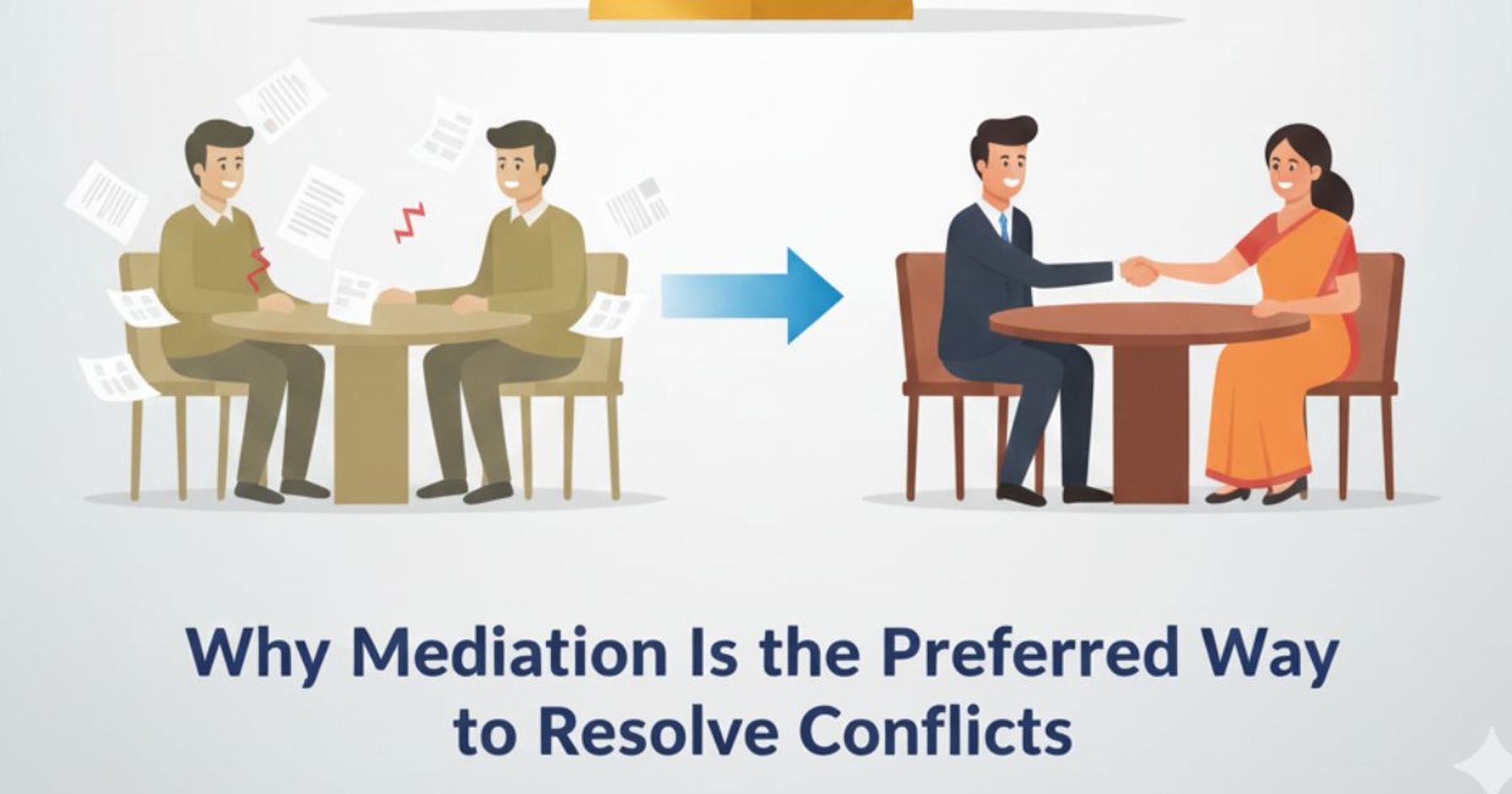
Conflicts, whether personal, financial, or business-related, can take a toll on anyone. Many people want a solution that feels fair, calm, and less stressful. This is where mediation is becoming a preferred approach for resolving disputes in India. Mediation focuses on communication rather than confrontation. Instead of lengthy procedures or heated arguments, it encourages both sides to sit together with the support of a neutral mediator. For people who want clarity, privacy, and a smoother path toward settlement, mediation can feel like a more comfortable option.
1. Mediation Encourages Healthy Communication In many disputes, the primary issue is miscommunication or misunderstanding. During mediation, both sides get a chance to express their concerns in a calm and structured environment. This often helps people understand each other’s viewpoints better and move towards a mutually acceptable solution.
2. It Helps Reduce Emotional Stress Legal disputes can be emotionally draining. Mediation gives people the space to talk openly, without the pressure of formal procedures. This relaxed setting may reduce stress and help both sides think more clearly.
3. Mediation Offers More Privacy Many individuals prefer to keep their personal or financial matters confidential. Unlike traditional dispute resolution processes, mediation is usually private. People often feel more comfortable discussing sensitive issues in such a setting.
4. It Can Maintain Relationships Better Whether it’s a family issue, business disagreement, or financial dispute, preserving relationships is important. Mediation focuses on cooperation instead of confrontation, which helps maintain respect between parties. This becomes especially helpful in long-term relationships like family members, business partners, or clients.
5. Flexible and Comfortable Approach Every conflict is different. Mediation allows flexibility so both sides can discuss solutions that feel comfortable to them. People often appreciate having the freedom to talk, negotiate, and explore options at their own pace.
6. Mediators Act as Neutral Guides A mediator doesn’t take sides or impose decisions. Their role is to guide the conversation and help both parties understand each other. This neutral support often helps reduce tension and encourages fair discussion.
Final Thoughts Mediation is becoming a preferred choice in India because it feels more human, more respectful, and less stressful. Instead of pushing for confrontation, it allows people to find common ground and move forward with clarity. For conflicts related to finances, family matters, property, or business, mediation can create a smoother and more balanced path toward understanding. Professionals or legal experts experienced in mediation can guide individuals on the right approach based on their situation.